The short answer
A resin shed is a dual-wall polyethylene kit with a steel frame inside, sold in fixed sizes with a limited warranty, such as the 10 years Lifetime lists for its 8x10. A wood shed takes longer to build but can be any size from 4 to 16 ft wide in the designer, carries heavy shelves on 2x4 studs and is repaired with lumber yard parts.
The resin vs wood shed choice is a choice between a finished product and a building you make your own. A resin shed is a plastic kit: it arrives in boxes, goes together in a day or two and never needs paint. A wood shed is framed from standard lumber, so you choose the size, hang anything from the studs and fix it with parts from any lumber yard.
This guide explains what resin sheds are made of, then compares the two on upkeep, strength, size, base and lifespan. The wood numbers come from our shed designer, which draws the frame and counts every board, so you can see what you would be building. The full build is in the how to build a shed guide.
Resin vs wood shed at a glance
Start with the big differences. Resin specs below come from one maker’s product page, read on November 13, 2026; other brands differ, so check the model you like.
| Point | Resin kit shed | Wood shed from the designer |
|---|---|---|
| Material | Dual-wall HDPE with steel reinforcement (Lifetime 8x10) | 2x4 walls at 16 inches on center, 2x6 rafters |
| Sizes | Fixed list per maker | 4 to 16 ft wide, 4 to 24 ft deep |
| Floor | Slip-resistant textured floor on that model | 2x6 joists on 4x6 skids, 3/4 in plywood |
| Finish | Never needs painting, per Lifetime | Paint or stain |
| Warranty | 10-year limited (Lifetime 8x10) | None, it is your building |
| Repairs | Parts from the maker | Any lumber yard |
What a resin shed is
Resin is the trade word for the plastic the panels are molded from. Lifetime describes its 8x10 outdoor storage shed as “Dual-Wall High-Density Polyethylene (HDPE) Construction” with a “steel-reinforced framework” and a “slip-resistant, wood grain-textured floor” (Lifetime product page, read November 2026).
What a wood shed is
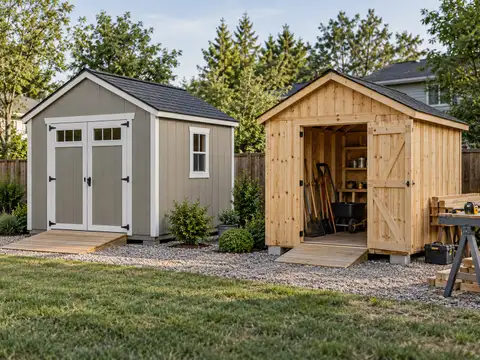
A wood shed in the designer is a stick-framed building: a floor of 2x6 joists on 4x6 pressure-treated skids, walls of 2x4 studs at 16 inches on center, and a roof of 2x6 rafters under OSB and shingles or metal. Panel siding nails straight to the studs. Every part is a stock lumber size.
Who each one suits
Resin suits someone who wants storage now, with no painting, and is happy with a size from the maker’s list. Wood suits someone who wants a particular size, a workbench, a loft or power, or who just likes building.
Upkeep: no paint vs paint and care
Upkeep is where resin makes its strongest case.
Resin upkeep
Lifetime says its panels “never need painting” (Lifetime product page, 2026). In practice resin upkeep is a wash with a hose and mild soap, and checking that the doors still line up. The thing that hurts a resin shed is a base that settles, because the panels flex and the doors drift out of square.
Wood upkeep
Wood needs a finish and it needs to stay dry. The designer runs the siding 1 inch below the floor framing so water drips clear of the joists, which leaves the bottom edge close to the gravel on a skid floor; seal that edge and keep splash off it. You paint the siding, keep the edges sealed and repaint when the finish wears. Our how to paint a shed guide covers products, primer and order.
The real trade
Resin trades your future time for less choice now. Wood costs a paint day every few years and gives you a shed you can change. Neither is free of care: both need a sound base and air moving through.
Strength, shelves and what you can hang
People rarely think about this until the shed is full.
Resin walls and shelving
A resin wall is a molded panel, not a frame. Heavy shelves need the maker’s own shelf kit or brackets, fixed where the maker says. Screwing into random spots in a hollow panel does not hold much weight and can crack the plastic. Check the accessories the maker sells before you buy the shed.
Wood walls and shelving
Every stud in a wood shed is a place to fix a shelf bracket, a pegboard or a tool rail; our shed shelving ideas work from the designer’s 16 inch stud spacing. A storage loft over the walls is possible if you build it for the load, and the shed loft guide shows how.
Snow and wind
Resin makers publish their own ratings per model. The designer sizes rafters for the snow load you pick, from 20 to 80 psf, and warns above 60 psf to get the roof reviewed. It does not do wind design, so on an exposed site anchor whichever shed you choose and ask your building department what applies.
Base, floor and anchoring
Neither shed belongs on bare grass. The base just does a different job for each.
A resin shed needs a flat base
Because a resin shed has no floor frame to span dips, the base must be flat and level across the whole footprint. A concrete slab, pavers on compacted gravel, or a level timber frame filled with gravel are the usual choices. Kit makers often state their own base size; Duramax, for one, asks for a base at least 4 inches larger than the shed and a slab of 4 to 5 inches (Duramax assembly manual). Follow the manual of your model.
A wood shed sits on skids or blocks
The designer’s floor sits on 4x6 skids over a gravel pad, or on concrete blocks. The joists bridge small dips, so the base can be simpler. The model code wants wood that touches the ground under permanent structures for human occupancy to be pressure treated for ground contact (2021 IRC1, R317.1.2), which is why the skids are rated for it. The shed foundation guide compares the options.
Anchoring
A light plastic shell catches wind like a sail. Anchor a resin shed with the maker’s kit or with anchors suited to your base. A wood shed is heavier but still benefits from anchors in windy areas; see the shed anchoring guide.
- 1International Code Council 2021 International Residential Code, Chapter 3: Building Planning
Sizes and lifespan
Fixed sizes vs any size
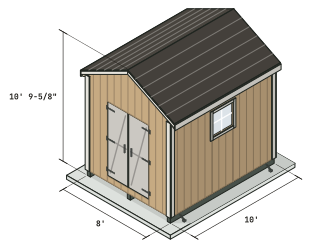
Resin sheds come only in the sizes the maker molds, so the shed has to fit the list. The designer draws gable sheds from 4 to 16 ft wide and 4 to 24 ft deep, at any width or depth in that range, with roof pitches from 4/12 to 6/12. If your spot is 9 ft wide, wood fits it; a kit may not.
How long each one lasts
For resin, the warranty is the only number with a source. Lifetime lists a 10-year limited warranty for its 8x10 (Lifetime product page, 2026). A wood shed has no warranty, but every part can be replaced, so its life depends on keeping water out and the finish up. We do not have published data comparing real lifespans, so we do not give you one.
Changing your mind later
A resin shed stays the shed it was sold as. A wood shed can get a window, a second door, insulation, a loft or power. If there is any chance the shed becomes a workshop or an office, that settles it.
How to choose between resin and wood
Choose resin if
- You want storage only, up in a weekend.
- You never want to paint.
- A size from the maker’s list fits your yard.
- You will build a flat, level base first.
Choose wood if
- You want a size or pitch no kit sells.
- You want heavy shelves, a bench, a loft or power.
- You want to repair it yourself for decades.
- You want it to match the house.
Start your wood shed from a plan
If wood wins, the shed designer draws your size and counts every board. The free 8x10 gable shed plan is a good starting point for a resin sized footprint, and the metal vs wood shed comparison covers the steel option. Check with your building department before you build, because the size that needs a permit varies by town.
Carpenter's tip
Resin vs wood shed in one line
Resin buys you no paint and a fast build in a fixed size. Wood buys you any size and a shed you can keep changing.
Sources
Every number in this guide that does not come from our own shed designer was checked against these 2 documents, numbered in the order the text first cites them and read on Sep 29, 2026. 2 are codes, agencies, makers and stores.
- 1International Code Council2021 International Residential Code, Chapter 3: Building Planning
- 2Duramax (manual hosted by Sheds For Less Direct)4x8 Sidemate Shed assembly manual