The short answer
A metal shed is a steel kit that goes up fast but needs a flat base and anchors, and it is hard to change later. A wood shed costs more effort but uses standard lumber: the designer's 10x12 gable uses 2x4 walls at 16 inches on center, 2x6 rafters and 14 sheets of panel siding, and you can add shelves, power or a window anywhere.
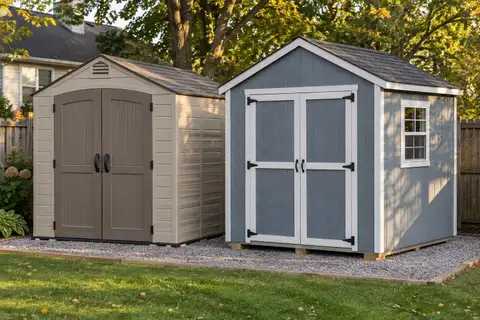
The metal vs wood shed question comes down to one thing: do you want a box or a building? A metal shed is a steel kit you bolt together on a base you build yourself. A wood shed is framed with standard lumber, so you can change it, insulate it, wire it and fix it with parts from any lumber yard. Both store a mower. Only one grows with you.
This guide compares the two on the points that decide a purchase: framing and strength, the base and anchors, upkeep, condensation, and what you can change later. For the wood side we use the numbers our shed designer draws for a 10x12 gable, so you can see exactly what goes into one. If you are still deciding whether to build at all, the how to build a shed guide walks the whole job.
Metal vs wood shed: the short comparison
Here is how the two types differ before you look at any single brand. Steel kits vary a lot by maker, so read the spec sheet of the model you are looking at; the wood column comes from the designer’s default 10x12.
| Point | Steel kit shed | Wood shed (designer 10x12 gable) |
|---|---|---|
| Frame | Thin steel panels and channels, bolted | 2x4 studs at 16 inches on center, 2x6 rafters |
| Floor | Often not included, or sold as a kit | 2x6 joists on 4x6 skids, 3/4 in plywood |
| Siding | Painted or coated steel panels | 14 sheets of 4x8 panel siding |
| Base | Flat, level slab or frame you build | Gravel pad under the skids |
| Changes later | Hard: cutting panels voids coatings | Easy: add a window, shelves or power |
| Upkeep | No paint, watch scratches for rust | Paint or stain, keep wood off the ground |
Where metal sheds win
A steel kit is light, ships in a flat box and goes together with a screwdriver and a step ladder. There is no cutting list and no lumber to haul. The panels come finished, so there is no paint day. For a small shed that only holds a mower, bikes and a few tools, a metal kit is a fair answer, especially on a budget or a rental where you may take it with you.
Where wood sheds win
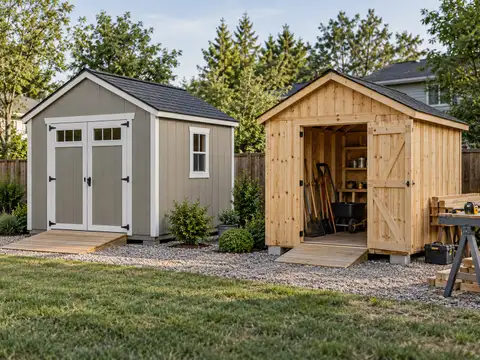
A wood shed is made of parts you can buy at any lumber yard, and that is its biggest advantage. Every stud is a place to hang a shelf. Every bay between studs can take insulation. A window or a second door is a matter of framing a new opening. When a board gets damaged you replace that board. A steel panel with a crease in it is usually a panel you have to order from the maker.
The deciding question
Ask what you will do inside. Pure storage points toward metal or resin. A workshop, an office, a potting shed or anything you will stand in every week points toward wood. If you want to see the resin option too, read the resin vs wood shed comparison.
Strength and framing: steel panels vs studs and rafters
Strength in a shed is less about the material and more about how the pieces are joined and what holds the building down.
How a steel kit carries load
Most steel kits rely on the panels themselves, stiffened by bends and ribs, plus light channels at the base, corners and roof. That works well once the shell is bolted together, square and anchored. Before that it is floppy, which is why the base has to be flat: a twisted base gives you doors that rub and panels that will not line up.
How a wood shed carries load
The designer frames walls of 2x4 studs at 16 inches on center, with a double top plate, and roofs with 2x6 rafters. On the 10x12 gable that is 20 rafters and 4 skids under 10 floor joists. The panel siding is nailed straight to the studs and is what braces the wall; the wall framing guide shows how the designer checks it. That is a lot of wood, and it is why a wood shed shrugs off a heavy shelf of paint cans or a bike hoist in the rafters.
Snow and wind
Steel kit makers publish their own roof load and wind ratings for each model, so read them and compare them with your area. The designer lets you set the snow load from 20 to 80 psf and sizes the rafters for it, and above 60 psf it warns you to get the roof reviewed. Wind design is not part of the designer, so on a windy site plan anchors either way, and check with your building department.
Base and anchoring for each type
Neither type should sit on bare grass. What changes is what the base has to do.
A metal shed needs a flat base and anchors
A steel kit needs a base that is flat and level across the whole footprint, because the shell has no floor frame to take up unevenness. A slab or a timber frame filled with gravel is the usual answer. One kit maker, Duramax, tells buyers to make the base at least 4 inches larger than the shed, to pour a slab 4 to 5 inches thick, and to anchor the shed to it (Duramax assembly manual). Steel kit makers commonly sell anchor kits for their models, and a light shell needs one. Our shed anchoring guide covers ground anchors and slab anchors.
A wood shed sits on skids or blocks
The designer puts the wood shed on 4x6 pressure-treated skids over a gravel pad, or on concrete blocks. The floor frame spans small dips, and the weight of the frame helps hold it down. The model code asks that wood in contact with the ground under permanent structures for human occupancy be pressure treated for ground contact (2021 IRC1, R317.1.2), which is why the skids are rated for it. The shed foundation guide compares the base options.
Fasteners in treated wood
If you build a wood base under a steel kit, use the right hardware. The IRC1 2021 asks for hot-dipped galvanized, stainless steel, silicon bronze or copper fasteners in pressure-treated wood (R317.3.1). Plain steel screws corrode in treated lumber.
- 1International Code Council 2021 International Residential Code, Chapter 3: Building Planning
Upkeep, rust, rot and condensation
This is the part buyers ask about most, and both types have a weak spot.
Metal: scratches and sweating
Coated steel does not need paint, but a scratch through the coating is where rust starts, so touch up scratches with the maker’s paint or a rust-inhibiting metal paint as soon as you see them. The bigger daily issue is condensation. A single layer of steel cools fast at night, and warm, damp air inside the shed condenses on the roof panels and drips onto whatever is below. Vents help. A floor that keeps ground moisture out helps more.
Wood: paint, edges and ground clearance
Wood needs a finish and needs to stay off the ground. The designer sets the floor on skids or blocks above the gravel and hangs the siding 1 inch below the floor framing, so rain runs off the panel face and past the joists. On the skid floor that leaves the siding about 4-1/2 inches above the pad, so the bottom edge is the one to keep sealed; our shed skirting guide works through that gap. Paint the siding and keep paint on every edge; the how to paint a shed guide covers the products and order. Repaint when the finish wears through, and a wood shed lasts as long as you keep water out of it.
Ventilation either way
Any closed shed needs air moving through it to stay dry. A wood shed with soffit and gable vents breathes on its own. A steel kit often has small vents in the gables, and adding more means cutting panels, which is another reason to choose the type before you choose the brand.
What you can change later
Your needs change. A storage shed becomes a workshop. A kid’s bike shed becomes a garden office. This is where the two types split hardest.
Adding windows, doors and shelves
In a wood shed, you frame a new opening with a header and jack studs and you are done. The designer lets you place windows and choose the door width before you build, so the openings land between studs and the cut list already includes the headers. In a steel kit, the openings are fixed by the factory. Cutting a steel panel leaves bare edges and may void the warranty, so read the warranty before you drill.
Power, insulation and finishing the inside
Wire runs along studs, insulation fits between them, and a plywood or drywall interior screws straight on. Steel kits have no stud cavities, so insulation and wiring need a separate frame inside. If you think you might want power one day, the wood shed is the safer bet. Our shed cost guide shows what the wood shell costs before you add those extras.
Resale and how it looks
A wood shed painted to match the house reads as part of the property. A steel kit reads as a kit. If you care how the yard looks, or you plan to sell, that is worth weighing too.
How to choose between metal and wood
Run through these questions and the answer usually becomes obvious.
Pick metal if
- You need simple storage and nothing else.
- You want it up in a weekend with basic tools.
- You rent, or you may move the shed later.
- You are fine with building a flat slab or frame base first.
Pick wood if
- You will work, garden or sit in the shed.
- You want shelves, a loft, power or insulation now or later.
- You want a size or roof pitch that no kit sells.
- You want to repair it with lumber yard parts for decades.
Build the wood shed from a free plan
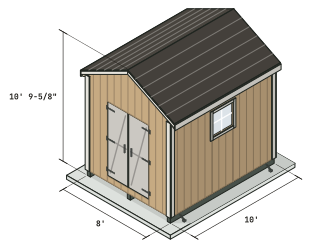
If wood wins, you do not need to start from a blank sheet. Pick a size in the shed designer and it draws the frame, counts every board and lists the fasteners. Or start from a ready plan such as the free 10x12 gable shed plan or the smaller 8x10 gable shed plan. Check with your building department before you build, because the size that needs a permit varies by town.
Carpenter's tip
Metal vs wood shed in one line
A metal shed is a box you buy; a wood shed is a building you can keep changing. Choose by what you will do inside, not by the box price.
Sources
Every number in this guide that does not come from our own shed designer was checked against these 2 documents, numbered in the order the text first cites them and read between Sep 29, 2026 and Sep 30, 2026. 2 are codes, agencies, makers and stores.
- 1International Code Council2021 International Residential Code, Chapter 3: Building Planning
- 2Duramax (manual hosted by Sheds For Less Direct)4x8 Sidemate Shed assembly manual